• Ed Boyden on Minding your Brain

    I listened to this absolutely fascinating podcast yesterday. Tyler Cowen is a great interviewer and he and Boyden cover such a huge range of neuroscience topics: from mental illness to optogenetics to ketamine to meditation to blowing up bits of your brain using a material like the use in diapers so that the bits are large enough to study under a microscope. Really, really great discussion. Definitely worth your time, give it a listen.

    BOYDEN:I think one of the things we have to figure out is how can you detect consciousness, and how can you create consciousness? Alan Turing proposed the Turing test, where you would converse with something and you could try to decide whether it was conscious. But with Siri and Alexa and all this stuff in homes and on phones nowadays, I think everybody would agree that’s probably not enough. You need to know something about the internal state as well, but we don’t have a firm grasp on that yet.

    I also loved this exchange:

    COWEN: Is there a puppet master in the theater, or is it a kind of nominalist reality, where all there are are the different desires? And maybe the film involves a kind of illusion that someone’s in control, but that’s just another actor in the play?

    BOYDEN: Here’s another way of looking at it, which is there’s so many things that we’re consciously aware of, but the vast majority of the things that the brain is doing, we’re probably unconsciously aware of.

    For example, here we are in my office, and there’s all sorts of stuff around. Your brain has been processing a lot of it. If I point at that blue highlighter over there, you probably saw it earlier but were not paying conscious attention to it. But now that I point at it, you are consciously aware of it.

    I actually think that something that we have to understand is, how are all these unconscious processes — this roiling sea of stuff that we have no access to — how are those processes contributing to the emergence of consciousness?

    That’s one reason why I’m very excited to study the process of consciousness, if you will. What are the processes in the brain that lead to it that happen beforehand and that might help us understand, in a causal way, what gives rise to consciousness? But again, this is just an idea right now.


  • 2019-04-12 15.07.12

    Love it when shuffle gives you EXACTLY the right song for snaking through Red Bank traffic.</>


  • 2019-04-10 13.15.55


    5 years ago today (thanks Day One for the reminder). Seems like we’ve done a lifetime of travel in this thing and it’s only been 5 years. #bestpurchaseever


  • 2019-04-10 12.22.27

    Spring on Nassau St, Princeton.


  • Spotify or Apple Music?

    I’ve been using Spotify since July, 2011 (when it first became available in the US). It is my go-to streaming service. We’ve had the family plan for years. I use it to work on collaborative playlists with the other musicians with whom I play. I use it when I am learning new songs–being able to hear multiple versions/other artist’s versions of a song is super helpful.

    But primarily I use Spotify to discover new music. Spotify’s discovery features are without equal. I’ve become aware of and a fan of more new musicians on Spotify than all the radio or record stores in the world could have ever turned me on to.

    From Spotify’s weekly Discover playlist which has an uncanny knack for presenting me with artists I’ve never heard of (though occasionally, too, it is way off base) to its “related” functions that allow you to do really deep dives into obscure genres, Spotify does an amazing job at preventing stagnation in your listening habits.

    There are also a bunch of external tools the the Spotify API makes available for discover: Discover Quickly, Smarter Playlists and Organize your Music are all good tools for finding new music.

    What this means is that I’m regularly listening to artists who I would have never listened to otherwise. The problem is that Spotify (and, frankly all of the other streaming services) pay these artists squat. That streaming royalties are too low is a given.

    But now that Apple seems willing to pay artists more than Spotify, the question is whether or not an unfairly low royalty payment is better than no royalty payment at all? Meaning, if I didn’t discover the artist on Spotify I would never have listened to them at all. I mean, 1% of $1.00 is better than 0% of $10, right?

    At issue is the Copyright Royalty Board’s 2018 decision to raise the rate paid to songwriters by 44% over the next five years. Spotify, along with three other streaming services — Amazon, Google and SiriusXM/Pandora — is appealing that decision to the board, a move that has no direct precedent. The four companies have been shellacked with criticism by artists for their action…

    Apple, which would also benefit if the rate increase is nullified, is not part of the appeal…

    As a sign of how badly the PR war is going, many songwriters are canceling Spotify subscriptions and doing so publicly on social media, where they make sure to note their subscription fees will now be going to Apple Music.

    From: Apple Is the Real Winner in Spotify’s Battle Against Songwriters’ Rate Hike

    I understand why musicians would want to publicly cancel their Spotify accounts. They are trapped working in an industry that is and always has been horrifically unfair to musicians.

    But that said, I’ve been dreading the day that Apple takes off its gloves and reaches into its bottomless pockets in its war with Spotify. I love a lot of Apple’s stuff but, man, Apple Music absolutely sucks. Its interface is shit. Its discovery features are abysmal. I want Spotify to stay around, viable and –importantly–to keep finding new music for me to listen to.

    As a musician I’m torn here: go with the company that helps listeners find new music but doesn’t pay those musicians well or go with Apple who pays more but in the end probably pays a smaller universe of musicians because they push the same limited pool of performers to everyone.

    For now, I’m sticking with Spotify but will keep exporting my playlists to Apple Music for when Apple drives them out of business.


  • Turn Amazon Order History into a Markdown Table for Day One

    The other day I posted about using Keyboard Maestro to automate the process of getting my monthly Amazon Order history into a Day One Journal entry. That was the first step of the automation of this task.

    This has been a bit more challenging to automate than I was first thinking. I’m working towards this 3 step process:

    • Step 1: open up Day One and in Safari open up the URL for Amazon Order History report screen. [Done]
    • Step 2: automatically download this month’s Amazon Order History report [Need to figure this out]
    • Step 3: create a journal entry from a downloaded Amazon Order History .csv file [Now Done]

    I am still messing around with Keyboard Maestro for step 2 but was able to hack together a pretty handy Automator workflow for step 3. It’s a python + BASH script that

    • takes a .csv file, strips out the unnecessary columns,
    • totals up the amount spent for the month
    • create a Markdown table of the important columns from the .csv
    • creates a Day One Journal entry and tags it “Money”

    (more…)


  • 2019-04-08 10.59.26

    Spring!

    riding on Cooper


  • Stopping the Esc key from un-Maximizing Safari

    This little Keyboard Maestro recipe I whipped up to stop the super-annoying behavior of Esc un-Maximizing a full-screen Safari window alone is worth the price of the app.

    (more…)


  • Getting Amazon Purchase History into Day One

    Keyboard Maestro

    Inspired by listening to @ttscoff, @macsparky and @rosemaryorchard on yesterday’s Automators podcast, I made some slow progress but progress nonetheless! Trying to automate as much as possible my monthly entry in Day One of all of my purchases from that month from Amazon. Currently I’ve just got a repeating todo in Things that reminds me to launch this nifty Keyboard Maestro shortcut.

    Still requires that I download the .csv file, gussy it up in Numbers and paste it into Day One. Those steps are still a big reach for my automation skills but gives me something to work on.


  • Bear Mountain, 2019

    bear mountain

    My buddy the Nav Man and I went up to Bear Mountain this weekend to do some hiking and work on some song writing. Here are some pics:

    bear mountain
    bear mountain
    bear mountain
    bear mountain


Current Spins

Top Albums

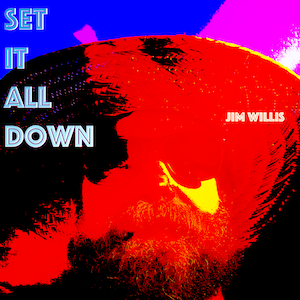
Check out my album Set It All Down on your favorite streaming service.


Posts Worth Reading:


Letterboxd


Reading Notes

  • Who profits from our constant state of dissatisfaction? The answer, of course, is painfully obvious. Every industry that sells a solution to a problem you […]
  • the shifts have been in place for awhile. A certain kind of book—say those reviewed in the NYRB—will become like opera, or theater, or ballet, […]
  • • No more struggle: “Whatever arises, train again and again in seeing it for what it is. The innermost essence of mind is without bias. […]
  • The real problem, in my mind, isn’t in the nature of this particular Venture-Capital operation. Because the whole raison-d’etre of Venture Capital is to make […]
  • . The EU invokes a mechanism called the precautionary principle in cases where an innovation, such as GMOs, has not yet been sufficiently researched for […]

Saved Links

RSS Error: A feed could not be found at `https://links.jimwillis.org/feed/atom?`; the status code is `404` and content-type is `text/html; charset=utf-8`